
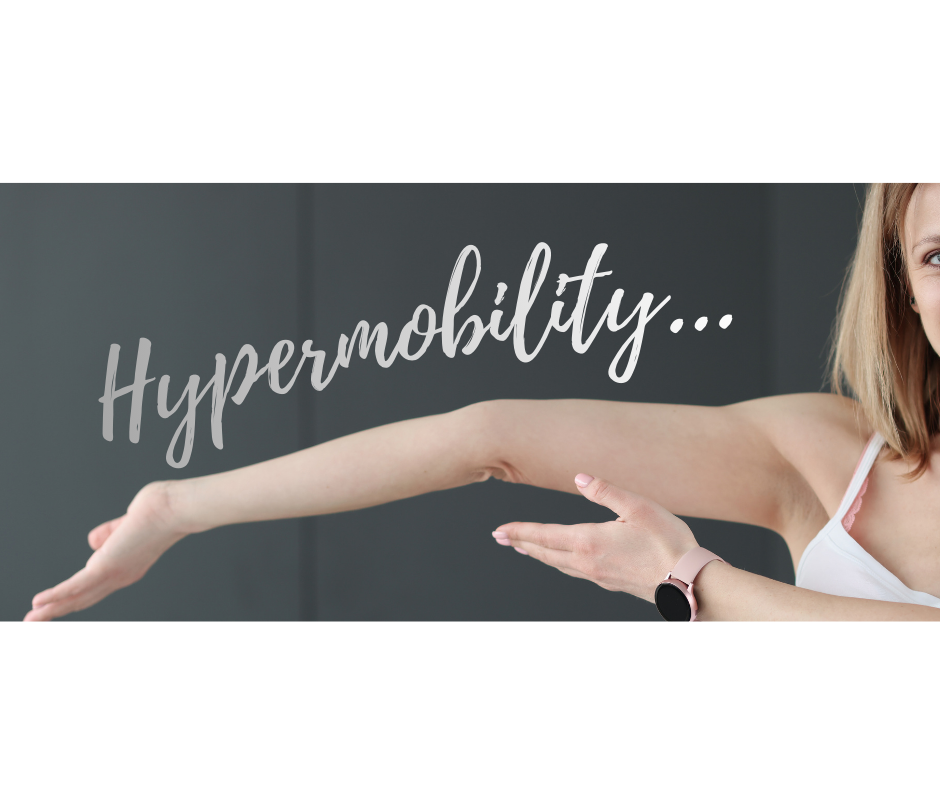
“You’re just really bendy”…
Many people with hypermobility often hear this for years! But for some people, hypermobility and being really flexible can come with more than just some cool party tricks – such as lots of muscle tightness, fatigue, joint instability, recurring injuries and ongoing pain
Hypermobility tends to exist on a spectrum – for some people, they have really flexible joints, but no symptoms at all. And then for others, it can impact every single connective tissue that supports their body.
At the advanced end of the spectrum, hypermobility can present as conditions such as Hypermobility Spectrum Disorders (HSD) or Ehlers-Danlos Syndromes (EDS), which can affect people of all ages.
I work a lot with people with all different degrees of hypermobility, with all sorts of backgrounds, and I am proud to be a listed health professional globally with the Ehler-Danlos Society to support people with advanced hypermobile conditions
So why is hypermobility such a big deal?
When our joints are hypermobile, they can move beyond their optimum range, and then the muscles have to work extra hard to stabilise the body – all the time. Over time, this can take a massive toll on the body!
And because connective tissue is found all throughout the body, when it’s hypermobile, it can do a lot more than just affect your joints and muscles.
Soft Tissue OT can support people with hyper mobility in a number of ways. This can include addressing muscle overload, looking at your posture and movement patterns, improving joint control and developing strategies that help the body stabilise better throughout your day
If you or someone you know experiences hypermobility, feel free to get in touch with me directly to chat before making an appointment. Otherwise, you can make an appointment online at any time here.